Rushing into action, you fail. ~ Lao Tzu
Song By Song: Wild Pink Yonder from Flight of the Atom Bee
I wrote/arranged/produced/created both The Big Shimmer & Flight of the Atom Bee almost concurrently … this took place over a period of months, mostly due to my having to learn so much about digital recording and arranging. I’ve written plenty about the title track, Flight of the Atom Bee, elsewhere.
I learned a tremendous amount with those two pieces. It was a time of non-stop experimentation and gear exploration and I was rapidly learning how to arrange and control sythesizers from my Macintosh, using StudioVision. I was also doing a lot of audio processing using other applications like Sound Design to modify, enhance, and make weird noises.
My next piece was to become Wild Pink Yonder, which was to take the number two spot between the two compositions.
By now I had a room full of synthesizers all being run off my Mac. I had also gotten a new mixer: the old Soundcraft I had been using for my first two songs was horrifically noisy on almost every channel. The venerable old blues establishment, Eli’s Mile High Club in Oakland, had been home to it for many many years and it seemed as if every part of the circuitry and signal chain, the faders and pots were encrusted with nicotine and spilled whiskey: they did not improve the sound.
I had a lot of effects boxes and processors: I tended to use them on specific synths in-line, which means I didn’t send the sound from the mixer and bring it back into the mix.
This was the first song where I programmed every note. I used an Alesis S4 rackmount synth for the bass line: it was an interesting synth, but I was too new to programming to explore its sound design possibilities in any real way (if it had had an outboard module like the JX-8P’s programmer, with sliders and knobs and switches, that would have been a different story), but it had some great sounds pre-programmed, including this round bass sound. The bassline itself was based on a simple blues I-IV-V chord progression, with a major seventh thrown in.
I began programming my first drum patterns on the Mac as well. Again this was another case where I had no idea what I was doing. I remembered reading an interview with James Brown where he said, “To make it funky, you have to hit the one!” Meaning the first beat of the measure. So I thought I better hit the one with a snare: I didn’t realize that, normally, you hit the the one with the kick drum and used the snare on the two and four: the back beat. You will notice that several songs on this album do not have a back beat. Well, live and learn, I say.
So I began building out the song, starting with the bassline and a rudimentary drum pattern.
I had an Emulator II, a very early sampler, which came with some very interesting samples—you can hear a lot of them on my first two instrumental cds. I started with a choir, trying different things until I got a nice dreamy flow going. I then added in the second melody line using a Roland D-110 “moog” patch.
The sound began to take shape and I found it reminded me of the furniture polish ads I saw on TV as a child, where the woman experienced near orgasmic ecstacy as she blissfully polished her dark oak table with lemon-scented aerosol wax. And once that happened, it was simply a matter of following each musical thread/line where it would take me.
I arranged in real time, meaning, I would work on a few measures at the same time, listening to everything together and tweaking each until each part locked into place. It was a very intuitive process, wherein I discarded a lot of ideas. Of course, there was always a certain amount of serendipity as well: I had the passion to follow accidental ideas where they took me and sometimes they paid off greatly.
There are a few bars at the very end of the piece, after the breakdown, that took me four days to work out. I didn’t mind at all.
Once I had all the parts in place, I realized it needed one more thing and I got my friend Lynn to come down and record the words “You naughty boy,” which I layered in the intro and a couple other spots in the song.
As I did for all of my instrumental work in those days, once the mix was set and exactly where I wanted it, I recorded the whole thing to digital audio tape and that was the final mix.
I still love this song many years later. I listen to it and wonder where some of it came from. It was during the comosing and arranging of this piece that I began to realize that we are really channeling the music: it is flowing through us to the degree our craft, discipline, and a certain je ne sais quois allow it to happen.
But that place, down below where the music is, is where I have found refuge and weathered many storms up here o the surface.

Dynamic Duo
I was having coffee this morning at Cole Coffee up on College. These two arrived and proved to be most cooperative and photogenic models. I particularly love the skull-and-crossbones sweater.
Mostly p1xels new website update
Song-By-Song: The Big Shimmer From The Flight Of The Atom Bee
The Big Shimmer was the opening for my first album, Flight of the Atom Bee, which you can read about here.
In the early days of my re-submerging into music making, around 1994, as I recall, I didn’t really know what I was doing. I had barely played guitar for almost twenty years. I had spent a couple of years in the late mid-eighties learning the ins and outs of creating semi-musical sound with a Serge Modular Synthesizer, which was a complex, finicky, almost impossible-to-play noise-making device. But I was still drinking and nothing came of my nightly analog meanderings. I would occasionally come up with amazing patches in my stupor, but one half-twist of one tiny non-descript knob somewhere on the largely un-labeled boards would destabilize the whole patch and I would never be able to get it back to where it had been, much less remember how I got there in the first place.
When, later, after a few years of sobriety, the light went on over my head and I remembered that I had at one time practiced guitar for up to eight hours a day, I got the Serge and some other gear out of storage and went on a synthesizer and music studio gear buying binge which lasted a couple of years.
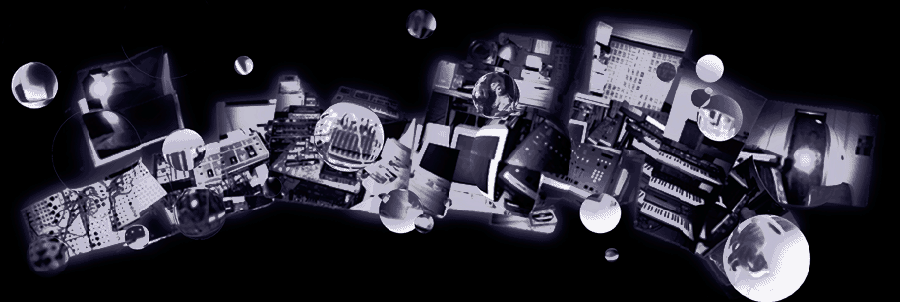
So before too long, I had a studio that looked like this:
That didn’t mean I knew what to do with it. It was baby steps at first. I think I have mentioned before that I had no clue about how midi worked, how to write a drum part, or a bass line, or how to score strings, and so on, so The Big Shimmer was comprised of small simple units of my own making.
The Big Shimmer started with the bass sound and then the bass line itself, which I put together on the Serge, using the Serge Touch Keyboard as a control-voltage sequencer, sync’ed to a little Roland TR-606 drum machine to generate beat clock, as well as the simple drum pattern you hear throughout the song. Later, I had to use a very early Roland midi interface to send beat-clock to the TR-606 drum machine to get the hi-hat patterns you hear in the song, which were processed through a Mutron Bi-Phase phase-shifter, a classic piece of analogue sound processing gear.
The chord in the song was played on a Roland JX-8P, a beautiful digital synth with analogue filters on which I would spend days tweaking one sound – it was a wonderful form of meditation. There were three primary patches used for The Big Shimmer: the main pad, one to allow a I-V chord progression, and the big wide shimmering tone you hear layered here and there, and in the last three or four minutes of the piece.. The chord itself was just a series of fifths up the keyboard C-G-D-A-E-B with the keys taped down and all the chords were recorded in one pass in real time. I did whatever layering and editing was necessary later.
I ran the JX-8P through a real spring reverb, so much of the motion you hear in the sound is the result of kinetic energy building standing waves within the spring itself. A beautiful sound.
By this time I was recording into my computer using the great StudioVision application.
I recorded the bass line, the chord and its variations via different patches on the keyboard, the drum parts, including the phase-shifted hi-hats, and the incidental serge noises separately.
I then began to take them apart and put them back together again in StudioVision, cutting and pasting snippets of sound and learning how to build and arrange a song.
It was an incredibly exciting time for me – I had no idea what I was doing. Everything was serendipitous, but I was fearless and would happily follow ideas wherever the sound would take me. There was a tremendous amount of uncovering, discovering, and then disposing.
I have no idea how long I worked on the piece once it was on my computer, but I do remember when I got the mix almost done, as you hear it now and I made a cassette of it and played it for my artist friend, the beautiful and talented and sexy Lynn Klein. We were driving to a restaurant and I parked as the song was about half-way through.
We sat until the piece was finished.
She looked at me and said,”Knox, that is just sex!”
I knew that I had succeeded.
A song of mine: Baby’s No Help
Do a good deed: teach an old lady how to flip the bird
Kitty update, lawsuit, golfing for imbeciles
When did ‘a thing’ become a thing? New P1xels site. 1st ‘real’ issue of iPhotographer finished & in the publishing queue.
Updates: Next issue of iPhotographer Magazine & The New P1xels Site
Music
Bay Bridge closed. Imogen Heap. 20 Feet From Stardom.
I discovered an audio-to-text service, VoiceBase, so I thought I would start adding transcripts. It’s pretty rough, so a lot of proofing and editing necessary … but worth a go. I think I sound like an idiot when I read the text!
That is right … Knox by the bay, and this is a big weekend for the San Francisco Bay, the Bay Bridge western span the new one that they have been working on for years, is opening up in a day or two … very exciting.
I’m old enough to remember the Key system, which was a train system which ran on the lower deck of the Bay Bridge, as a little boy and I remember riding on it. One time I don’t remember much—it was long time ago, but I know I rode on on it at least once.
So. I’ve seen them in the pictures of the new span and looks lovely. So I can’t wait to drive over it. I will report back as soon as I can.
In other good news, I discovered Imogen Heap on Audioboo and I’m a huge fan of hers. She is just one of those amazingly talented musical artists who really forges her own way into the world of of sound, in electronics and technology and I have so much respect for that. And she’s so musical, writes just lovely songs and then adds in these incredible tapestries, of mostly electronic sound to go with them.
So, to discover that she’s doing audioboos is so cool because, you know, I’ve been doing them for two years myself and it’s fun when you find that somebody you really like a doing something you’re doing to0. So I’m all energized and I’m really going to get back into doing audioboos again.
Hers are very much about her music. I think that’s what I need to do.
I’m really .. I mean … We have the magazine launched now, and the new P1xels is going to be up soon.
I really am getting back to music and I have to for my own sanity. P1xels pulled me away from it for a long time and I mean, it was necessary and there was a lot of work to be done, but it’s done now. Which I will address another time out. I don’t know … I really want to focus on music, but okay, so you know, muttering to myself.
Oh I know what I wanted to talk about: Twenty Feet From Stardom. The movie about, the documentary about backup singers and I saw that last week, and it’s a wonderful movies with Darlene Love, Claudia Linnear, Merry Clayton —just all these fantastic backup singers from the past four decades.
Just a lot of fantastic music, interviews, songs, and you can see what they all brought to the music and just turned these songs into something else turned them into masterpieces, really timeless emotional touchstones.
And what I found so interesting watching the documentary was that, with the exception of Darlene love, who started out as a lead singer and got relegated to being a backup singer because of Phil Spector being a prick that he is, all of them, when they tried to launch solo careers: the minute they stepped out front, they closed their eyes.
You can’t close your eyes when you’re out front. You have got to keep your eyes open to keep the connection with the audience.
If you are singing with your eyes closed, you’re watching a movie they can’t see, but all of them, the minute they stepped out front, their eyes closed. It was very interesting.
They have amazing instruments, I mean their voices are amazing, but there’s something about stepping out front. That changed everything for them.
So, just an observation.
Knox over and out until the next time.
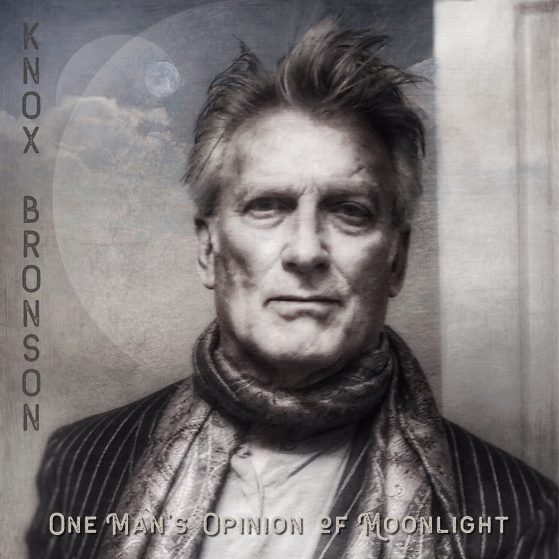
One Man’s Opinion Of Moonlight
Pop Down The Years